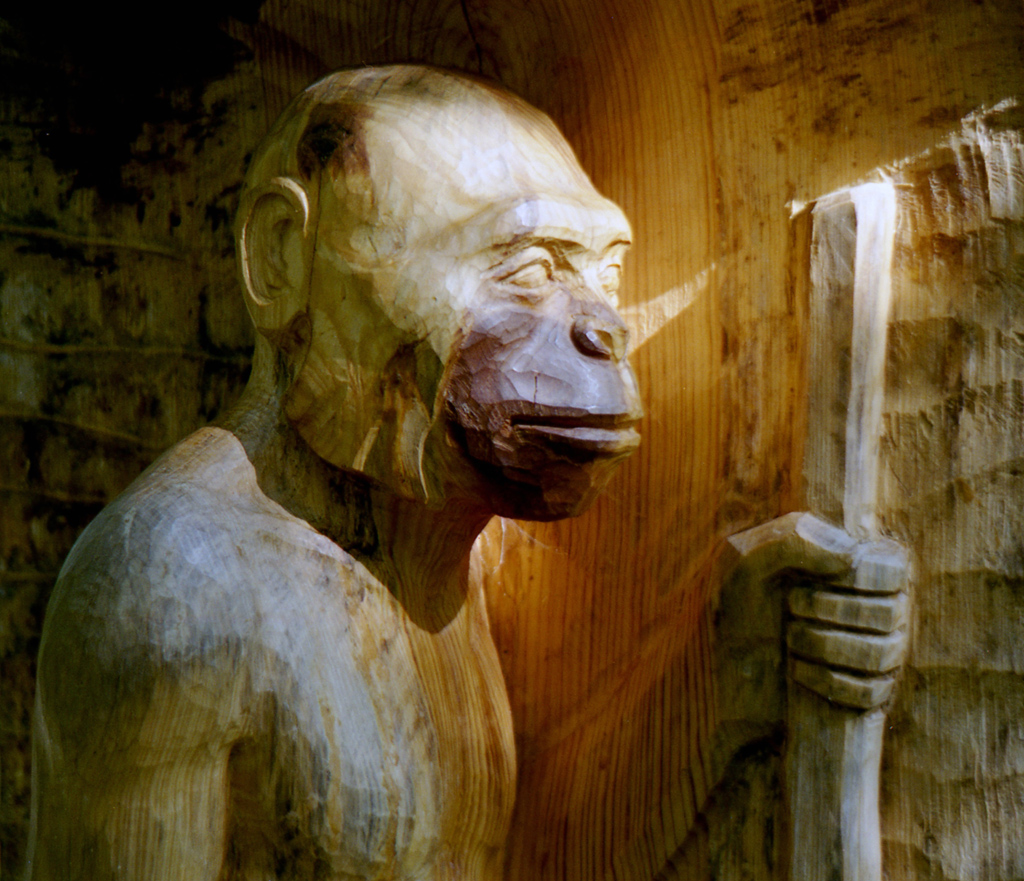
The encounter
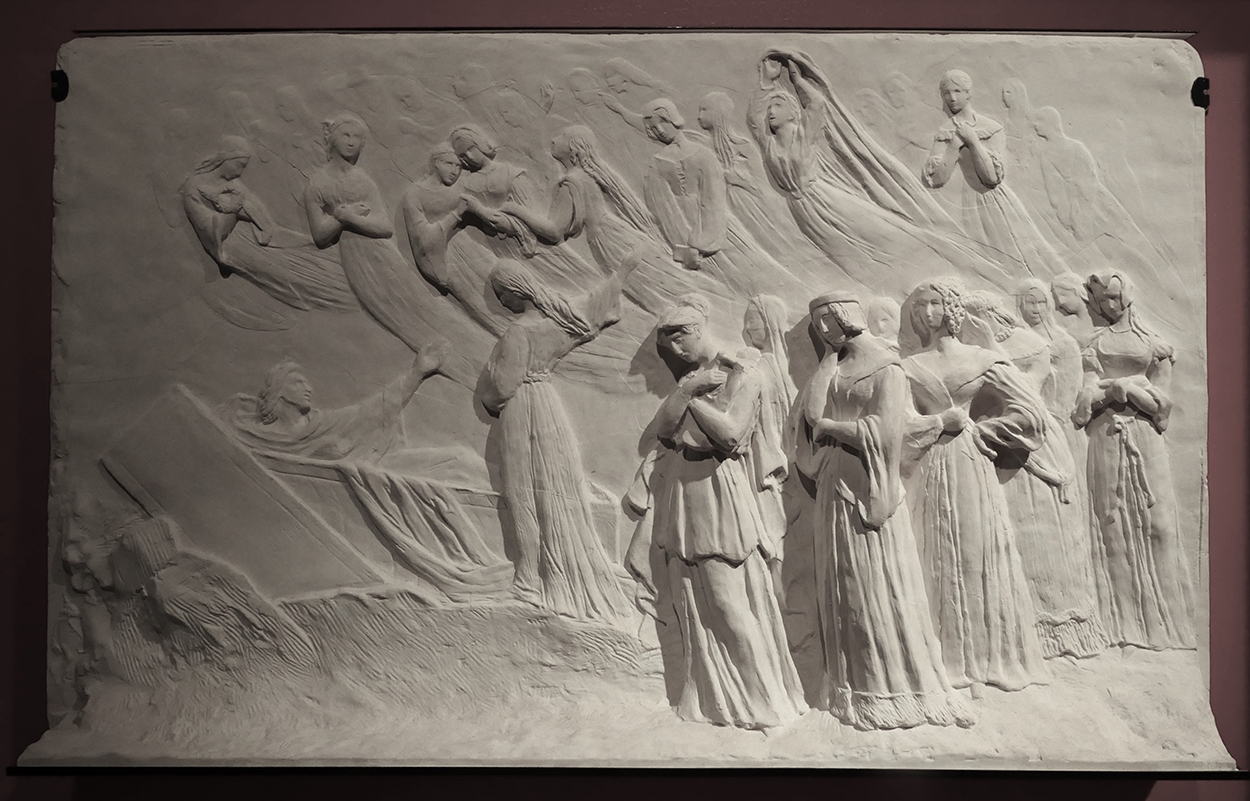
Marie d’Orléans died shortly after the birth of her son in 1839. She was 26 years old. During her short life as Princess of Orleans and, after her marriage, as Duchess of Württemberg, she devoted herself to sculpture with considerable success. In the museum of the Monastère royal de Brou, I was struck by this plaster work of hers. I will not venture to give a precise interpretation of her depiction of the ‘Rencontre du Juif errant et de Rachel’, but I assume that in the centre we see the Wandering Jew lying alive in a coffin, talking and gesticulating to Rachel who is standing in front of him. In the foreground, a procession of stately women moves along, and in the background, a crowd of floating shadows of deceased women. It is an intriguing, beautiful representation, which prompts me to quote a passage concerning the legend of Ahasuerus (the Wandering Jew) and Rachel, as described in La Pensée d’Edgar Quinet by Willy Aeschimann:
”Rachel incarne le pardon qui est seul capable de racheter le Juif errant. C’est elle qui en partageant la douleur de son amant lui apporte compassion et consolation. ‘Le paradis, c’est toi’, déclare Ahsvérus; Rachel lui répond qu’elle l’aime tant que Dieu. Dans la femme l’homme découvre la possibilité de recréer l’unité perdue. ‘Tu es toute chose’, dit Ahasvérus à Rachel, ‘et tout ce qui n’est pas toi n’est rien’.”
Photo of the week: Marie d’Orléans, La Rencontre du Juif errant et de Rachel, Epreuve en plâtre, vers 1834, Musée du Monastère royal de Brou, France 2024
 καιρός remembered
Leave a comment