-
Before sunset
A catamaran blocks my view of the sun that is about to set in the Indian Ocean. But the very last rays manage to pass under the elevated bottom of the boat, producing a faint reflection on the gently rolling waves. Similarly, but differently, in the photo below the rays of the setting sun penetrate a…
-
Backbone girl
Cleaning, cooking, fetching water, looking after the children, feeding and milking the family cow or buffalo, collecting firewood, all this and more is women’s work in many a traditional society. This Kumaoni mountain girl carries a tree home that she may even have cut herself with an axe, because in these parts women think nothing of…
-
With heart and soul
Wow! With her wild flowing hair this poster girl explodes in an outburst of energy and joy! In last week’s post we could admire the natural beauty of Gond women at the village pump. This week it’s admiration for self-willed Western girls in their choice of a musical instrument after their heart. Defying the prevailing…
-
Women at the village pump
Such a common sight, but always inviting to pause for a while and enjoy. Here it’s a few women of the Gond tribe with their feet in the mud around the village pump, cleaning vessels and jars. The shiny silver of the traditional armlet, anklets and elaborate belt reflects its beauty not only on the wearer…
-
Canal towns
Amsterdam, the Venice of the North as it is sometimes called, isn’t the only city in Holland that can boast of its beautiful canals. Canals in historical cities like Alkmaar, Haarlem, Leiden, Delft and Utrecht definitely have got class as well. The canals in Utrecht are very special indeed, because they are different. They are…
-
Shipwreck
No, no African boat people drowned in the Mediterranean. Only a harmless event of children at play in a countryside abounding in water. Wet clothes, that’s the only discomfort they’re suffering. A house on the waterfront; a boat or cycle as favourite mode of transport; more Dutch than this you can’t get it. Photos of the week: Weerribben,…
-
Weerribben
An old peat bog: after centuries of peat production now a nature reserve to explore leisurely by canoe or silent electric boat. Peat once was popular fuel enabling people to make it through the long, cold winters. With shovels it was dug and cut into bricks, row after row, layer after layer, creating the channels that…
-
Giants in the wind
In the last decade the number of electricity generating windmills in Holland has increased considerably. In some regions even to the extent that one can speak of an uncontrolled proliferation, with action groups as a result that protest against the pollution of the horizon. See for example the situation in a part of Flevoland, Holland’s youngest…
-
Flatland
Maybe it’s thanks to my Dutch origins that I still remember with delight the little book Flatland, in which Edwin Abbott gives full rein to his mathematical imagination in his description of a two-dimensional world. Although the Dutch landscape – especially its immense, flat polders reclaimed from the sea – does come rather close to…
-
Roadside entertainment
Moving images, stories told with moving images, invariably attract the attention of children, women and men. Most animals on the other hand, like the cow or bull here, can’t care less. Last week’s post spoke of the close relationship between man and cow in India, the last one almost being considered by man as a…
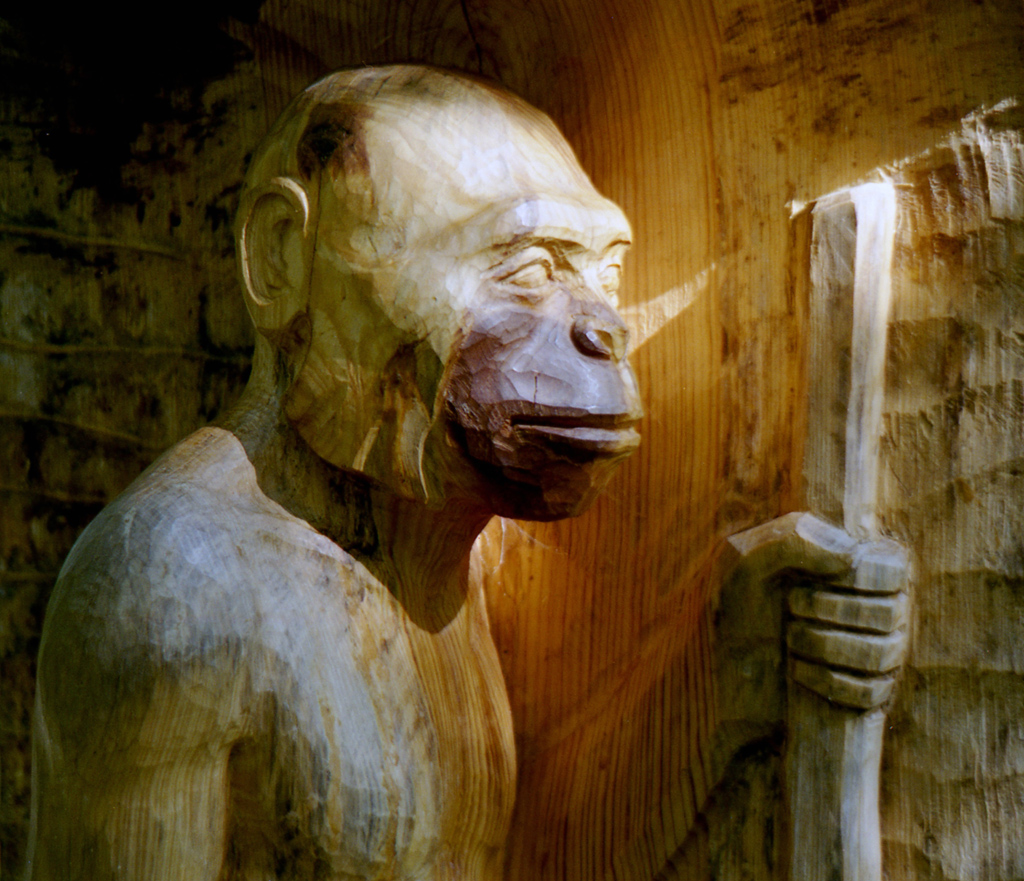
καιρός remembered
… the right moment, position chosen, shoot …
 καιρός remembered