The Pachinko temple
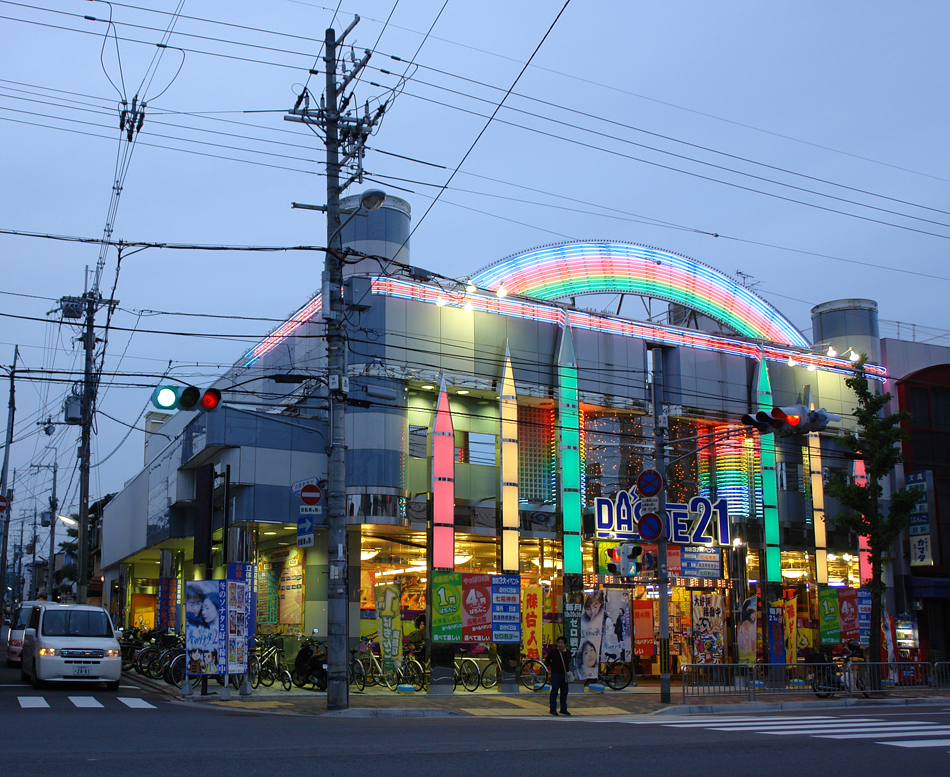
During my walks through various neighbourhoods of Kyoto, as I made my way from one beautiful temple, garden or palace to the next, I would occasionally come across buildings like the one in the photo, and I wondered what sort of place this was and what went on inside. One afternoon, I decided to go into a pachinko parlour – that’s what they were called, or so I’d heard – to see it with my own eyes. I opened the door and walked into a deafening wall of noise. The scene in the large hall left me standing there speechless with astonishment. There were rows upon rows of vertical pinball machines, with one person at each machine. Hundreds of people in total, all locked away in their own gambling worlds and surrounded by this infernal din. A little later, outside in the sudden silence of the street, I looked up at the façade of the colourful inferno from which I had just escaped. It bore the name ‘New Paradise’.
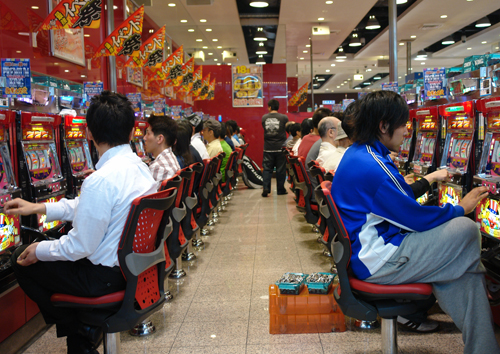
In Kyoto alone, there are certainly well over a hundred pachinko parlours, each of which is visited by hundreds of people at any given time of day. I reckon there are around 20 million regular pachinko players across Japan; perhaps we should call them pachinko addicts. That’s about one sixth of the total population!
I still don’t know how to reconcile the two images of Japan that have made the greatest impression on me: the one of a rich traditional culture, characterised by – let’s call it simply – the Zen spirit, and the other represented by the pachinko spirit. In the first, we see someone quietly contemplating a work of art, a garden or a cup of tea. And in the second, we see someone sitting for hours in front of a slot machine with an expressionless gaze. On the surface – or perhaps at a very deep level? – one might perceive a certain similarity between the expressions on the two faces and suggest that both may be seeking salvation, albeit each in their own way. But personally, I cannot shake the impression that we are dealing here with two irreconcilable worlds, two completely different ways of thinking, which miraculously coexist within the same society.
Photo of the week: Pachinko hall, Kyoto, Japan, 2008


Leave a comment