The raising of the flag
I was born after the Second World War in a liberated Netherlands. The country had just emerged from five years of occupation by Nazi Germany. I still remember very clearly the annual celebrations during my childhood on 5 May, the day in 1945 on which the country was liberated from the occupying forces. When I visited Tibet in 1996, one of the things that made a deep impression on me was the general atmosphere of mistrust between Tibetans and Chinese, particularly the ever-present Chinese army. Here, I experienced first-hand what it feels like to have to submit to the yoke of a powerful and hostile occupying force. It suddenly dawned on me what it must have been like in my own country during the years of German occupation. In such circumstances, people try to get on with their lives, through thick and thin. They have no choice but to tolerate the occupiers, and even to cooperate with them to a certain extent. But the dilemma of when cooperation turns into collaboration must weigh heavily on their consciences at all times.
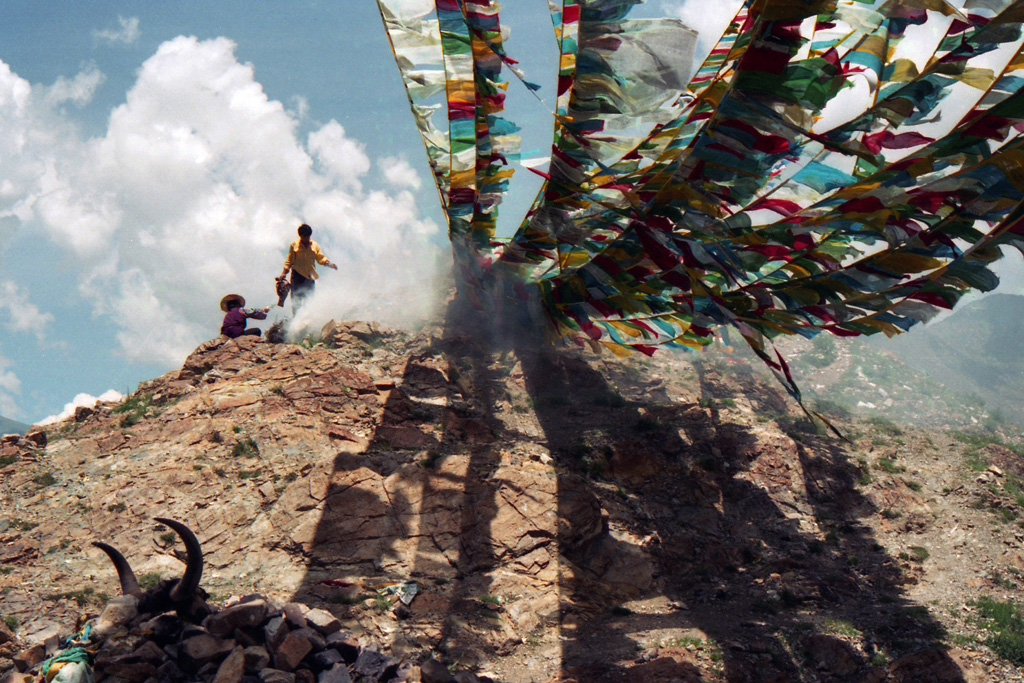
The Tibetans are a strong and admirable people, accustomed to surviving in the thin air on the roof of the world. On high mountain peaks and passes, they hang garlands of colourful prayer flags so that the wind can carry their messages of peace across the lands of the earth. The Tibetans do have a national flag, but just like images of their spiritual leader, it is strictly forbidden to display it within their own country.
Photo of the week: Lhasa, Tibet, 1996


Leave a Reply