Spinning progress
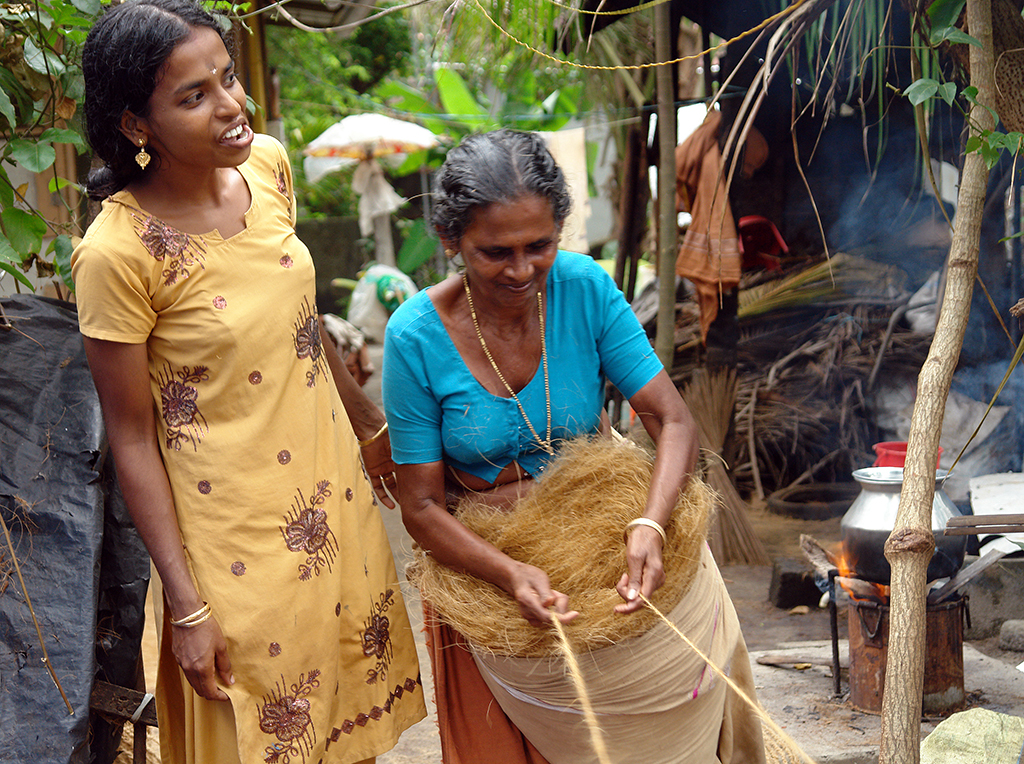
Seen from the air, Kerala appears to be inhabited solely by palm trees. People and houses are invisible. Yet there are many millions of them, hidden beneath the green canopy of the palm trees. It is therefore not surprising that processing coconut fibre – the fibrous outer husk of the coconut – into ropes and mats has long been a traditional occupation for hundreds of thousands of people. And it still is. Spinning coconut fibre is just one stage in the entire processing chain. It is carried out by women at home, as a cottage industry.
In my film Made in Kerala, you can see the whole process. Back then, around 1980, it took two women to spin the yarn. One woman was responsible for the magical part of the process – which you can see being carried out by the woman in the photograph – and a second woman turned a wheel that made the two hooks spin, to which the future ropes were attached.
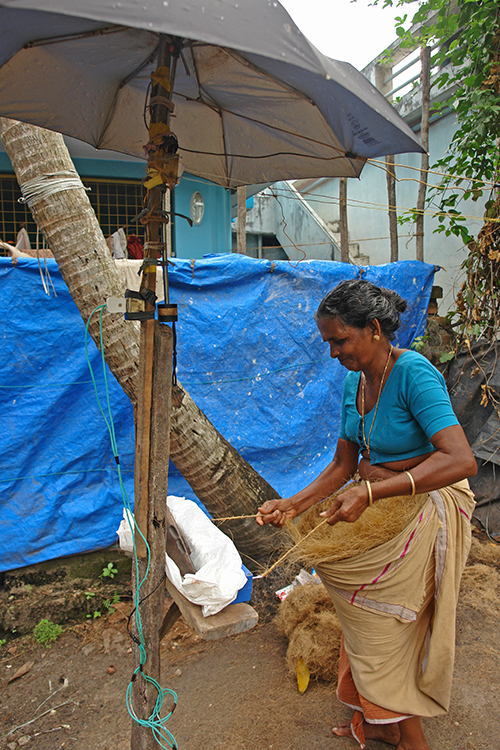
When I recently returned to the region where I had made my film, the women were still spinning coconut fibre in their courtyards, but now a single woman could do the work on her own. The hand-operated spinning wheel with its two hooks had been replaced by a simple electric device that made the hooks turn at the right speed.
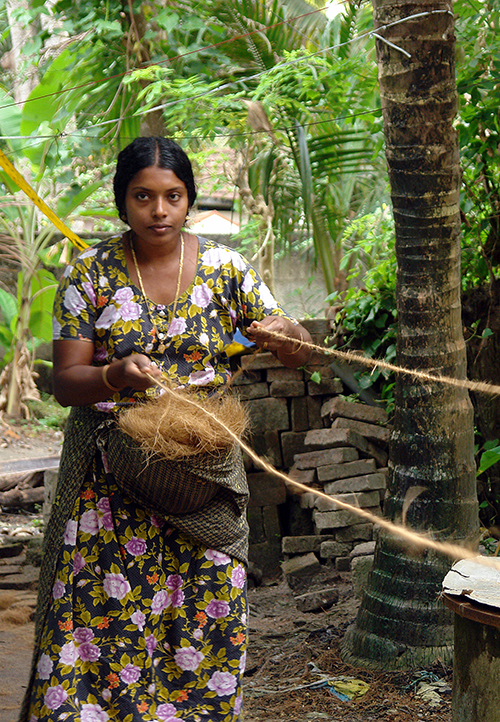
The spinning process may have changed somewhat over time, but the ladies are still just as lively and charming as they used to be.
Photos of the week: Coir spinning, Arattupuzha, Kerala, India 2014


Leave a Reply